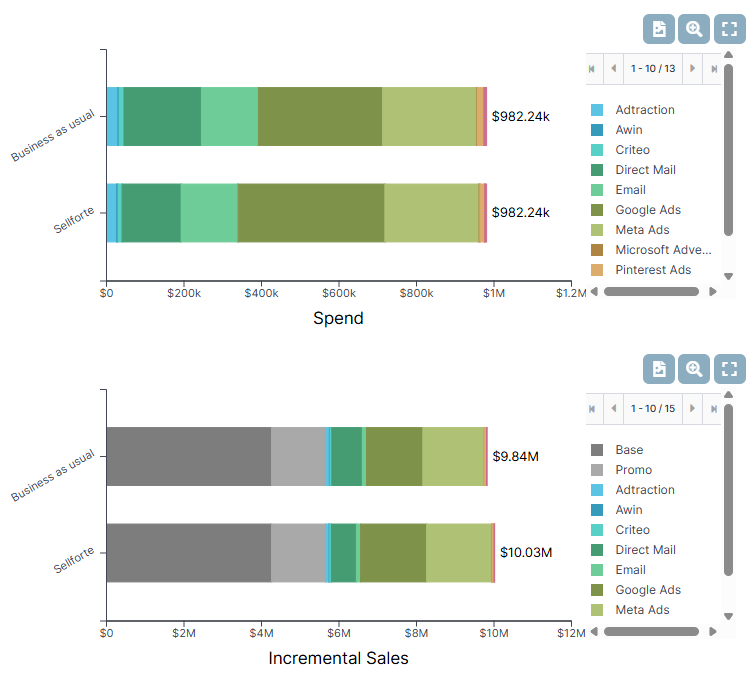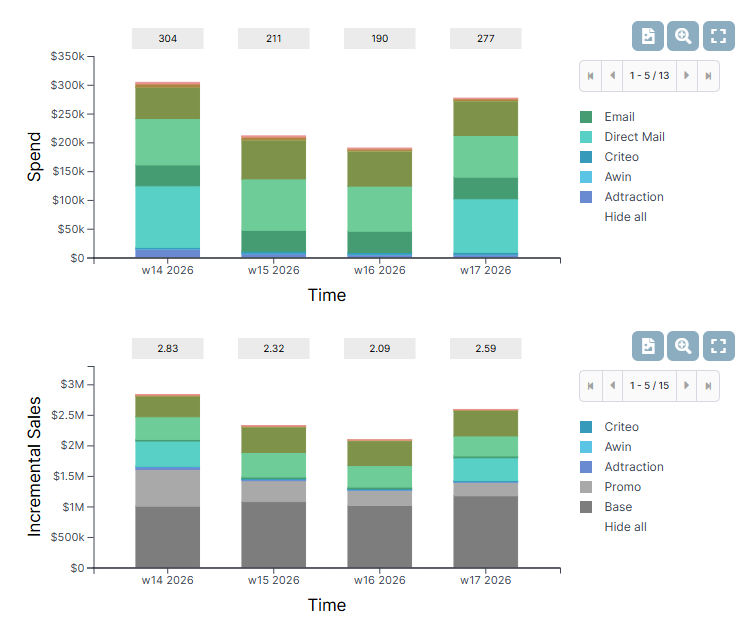
The Promotions Dashboard is a Sellforte feature that measures the true incremental impact of your promotions on sales and margin. Rather than showing promoted sales volume, it isolates what actually changed because of the promotion, giving you a clear picture of which discounts drove profitable growth and which eroded margin.
Promotions are a significant revenue driver for most retail and ecommerce businesses. Sellforte Labs research across ecommerce and DTC brands shows that promotions account for roughly 24% of total revenue on average, with the most promotion-intensive businesses seeing that figure approach 45%. Despite this, promotions are frequently left out of measurement frameworks entirely, creating blind spots that distort how media performance is evaluated.
Why promotions need to be measured properly
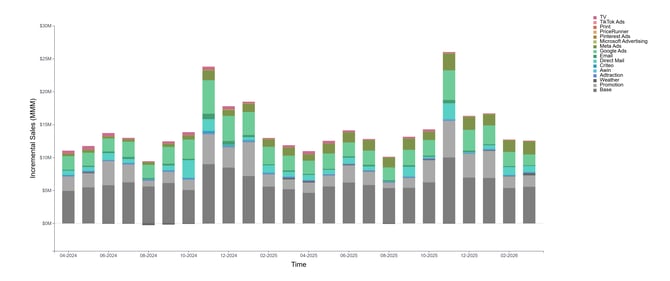
When promotions are excluded from measurement, their revenue impact tends to get attributed to bottom-of-funnel media channels instead, because promotional activity correlates strongly with performance campaigns. The result is inflated ROIs for conversion-focused channels, weak-looking ROIs for brand and awareness campaigns, and budget allocation recommendations that skew toward the wrong places. In short, measurement without promotions starts to behave like last-click attribution.
Sellforte models promotions as a distinct revenue driver within the MMM framework, which means the media ROIs you see in your Marketing Dashboard already reflect a world where promo-driven revenue has been properly separated out. The Promotions Dashboard then takes that same foundation and lets you analyze promotional performance in detail.
What you can analyze
The dashboard breaks down promotional performance across the dimensions relevant to your business. You can track incremental sales uplift and incremental margin impact over time, seeing day by day how each promotion period contributed beyond the baseline. ROI is calculated based on the granted discount relative to the incremental lift generated, at both sales and margin level. Margin ROI is the recommended primary metric, since a promotion can look strong on revenue while quietly destroying profitability.
You can slice performance by discount depth to understand where uplift peaks and where margin ROI turns negative. Splitting by promotion type, such as vouchers versus product promotions versus flash sales, shows which mechanics are worth repeating. Category and brand level breakdowns allow you to set guardrails that reflect how each part of the assortment responds to discounting, since the optimal discount depth varies considerably across categories.
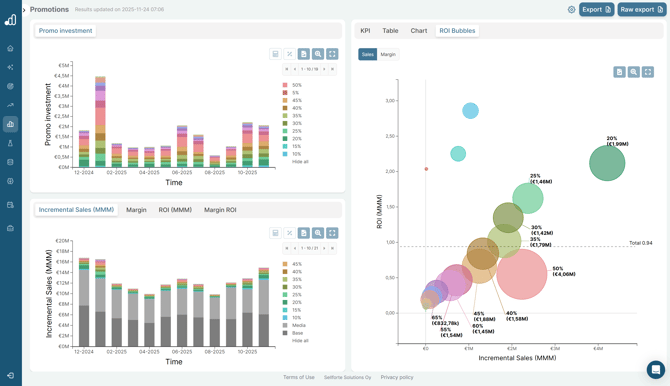
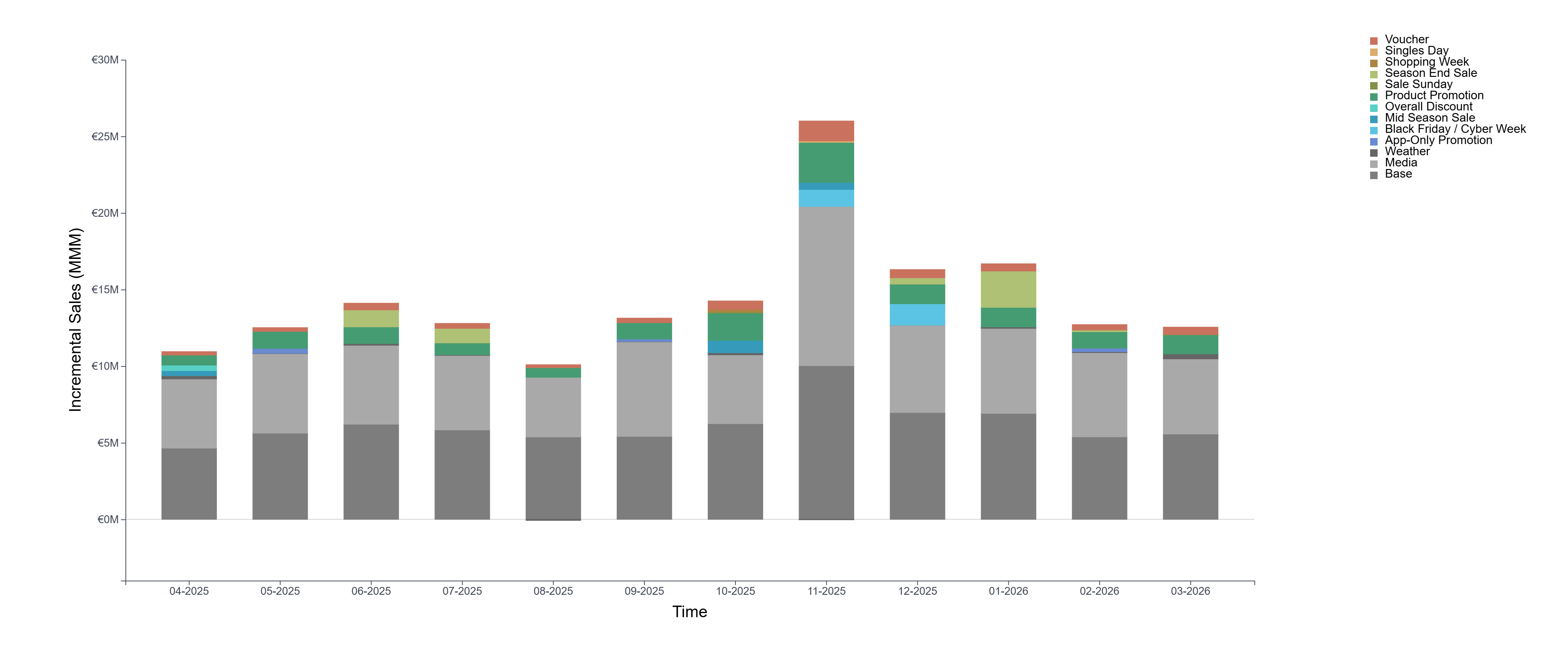
The dashboard also makes it straightforward to identify which promotions were margin positive versus margin negative, even in cases where sales figures looked strong. That distinction is what allows you to scale what works and stop or redesign what doesn't.
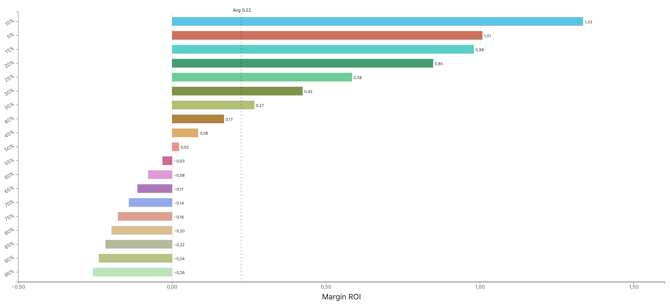
How this connects to media measurement
Because Sellforte accounts for promotions inside the MMM model, the two views reinforce each other. When you run budget optimization scenarios in the Optimizer, promotional activity is part of the picture, so you can simulate how different promo intensities interact with media spend plans. This matters most during high-promotion periods like Black Friday, where excluding promos would cause the model to misattribute their effect to media and produce flawed pacing recommendations.